
Keynote speakers
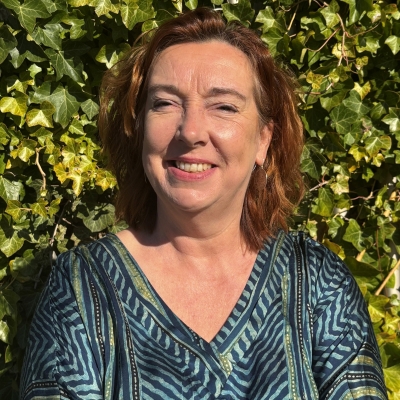
Carina Listerborn
Professor in Urban Planning
Director at the Institute for Urban Research (IUR)
I am a Professor in Urban Planning and Director of the Institute for Urban Research. I completed my PhD in 2002 at Chalmers University on discourses of urban safety planning from a feminist perspective and has since then been researching urban development strategies (including smart cities), the uses of public spaces from an intersectional perspective, housing inequalities, precarious housing conditions and the digitalisation of the housing market. I have been working full time at Malmö University since 2008 and have been engaged in establishing urban studies as a field of research and education through Bachelor-, Master- and PhD level. Before that I have been working at Human Geography Departments in Stockholm and Lund, as well as Gender Studies at Lund and Malmö.
Learn more about Carina Listerborn research
Title of Keynote:
Housing as an Embodied Situation: Rethinking Housing Politics through Feminist Lens
Abstract
This keynote engages a feminist and intersectional approach to housing and urban research by revisiting Simone de Beauvoir’s philosophical concept of the body-as-a-situation. Drawing on this framework, the lecture explores how contemporary housing inequalities in the Nordic context—particularly in Sweden—can be understood as socio-material processes that shape, enable, and constrain lived experiences.
Moving beyond dominant approaches that prioritise housing wealth, tenure, or market dynamics, the lecture asks instead: who gains access to housing, under what conditions, and with what consequences for embodied life? By positioning the body as irreducibly situated—always embedded in material, social, and political conditions—housing is reframed as a central site through which bodies are made possible or rendered precarious. From this perspective, housing is not merely a commodity or policy field, but a constitutive infrastructure of everyday life, deeply implicated in the reproduction of inequality. Housing inequalities and exclusions do not affect abstract populations equally; they are lived through differentiated bodies, shaped by gender, race, class, age, and legal status.
The lecture therefore argues for a feminist politics of housing that moves away from markets and abstract models, and instead begins from situated, embodied experience. Such an approach asks what bodies require in order to live, dwell, and flourish freely—and what forms of housing and urban policy might make this possible.